
The Bees Knew First: What One Measurement Box Can’t Tell You About Your Greenhouse
One measurement box per hectare can hide differences of several degrees, so here is why greenhouse climates are uneven and how to map them.
Practical tips and strategies for greenhouse growers on climate steering, VPD management, transpiration control, and seasonal cultivation challenges.
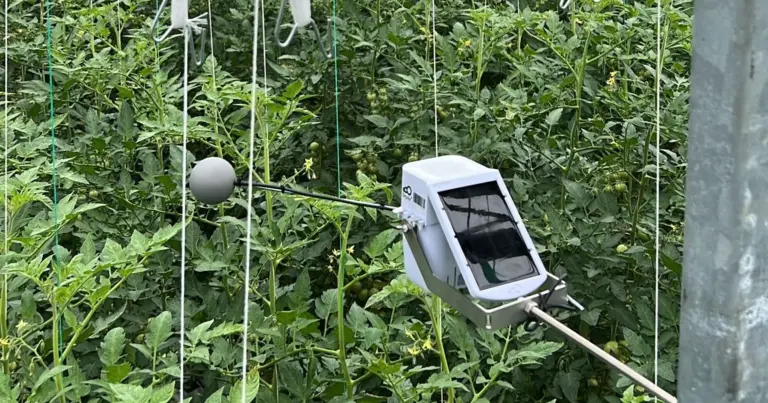
One measurement box per hectare can hide differences of several degrees, so here is why greenhouse climates are uneven and how to map them.
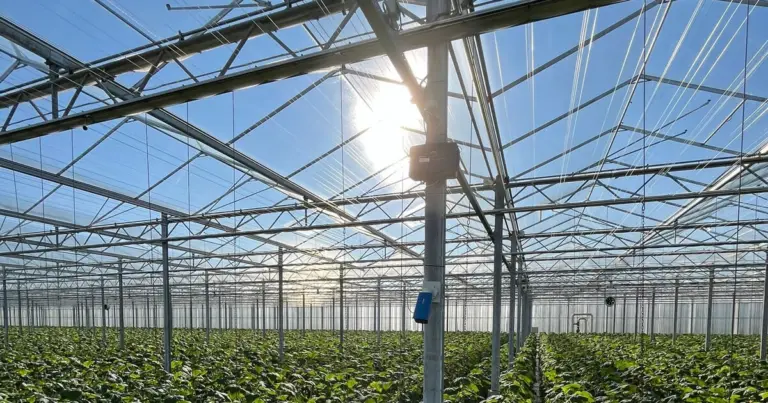
RTR is the 24-hour temperature a crop gets per mol of light: how to calculate it from yesterday’s numbers, and why it rises every autumn.
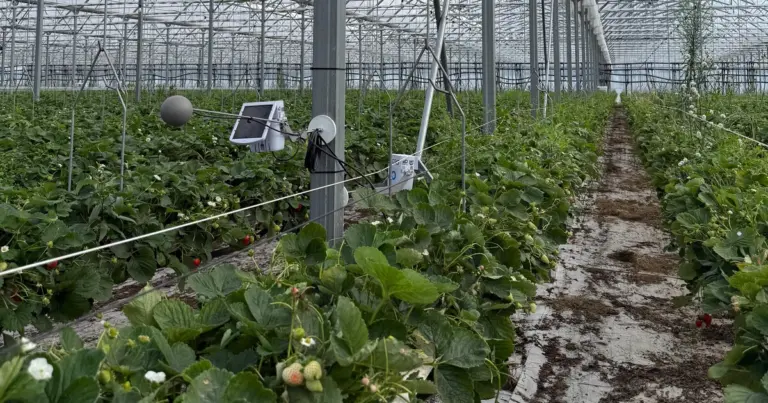
A strawberry trial cut drain water by 38% and total water by 19.5% with no yield loss.
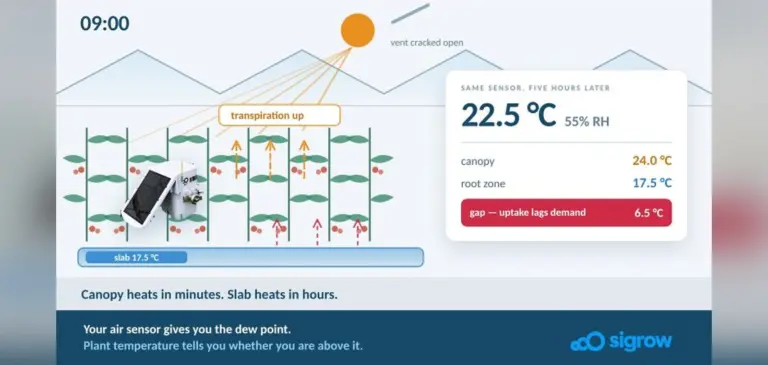
A respectable 24-hour average can hide a night on the dew point and a morning root zone that can’t keep up. Here’s the arithmetic behind both, and three fixes, cheapest first.
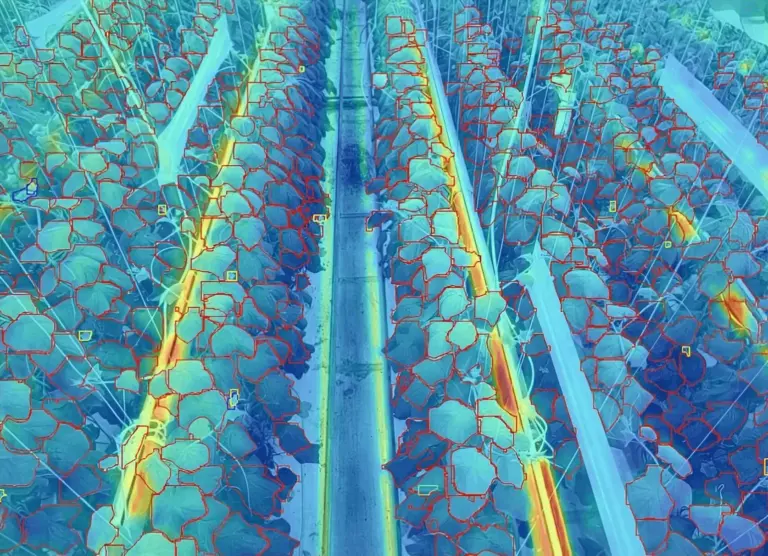
Nieuwe Oogst covers Voltiris spectral panels that filter NIR while passing PAR light. Sigrow monitors plant temperature at the Delphy trial — here is why crop-level data matters for evaluating any climate technology.
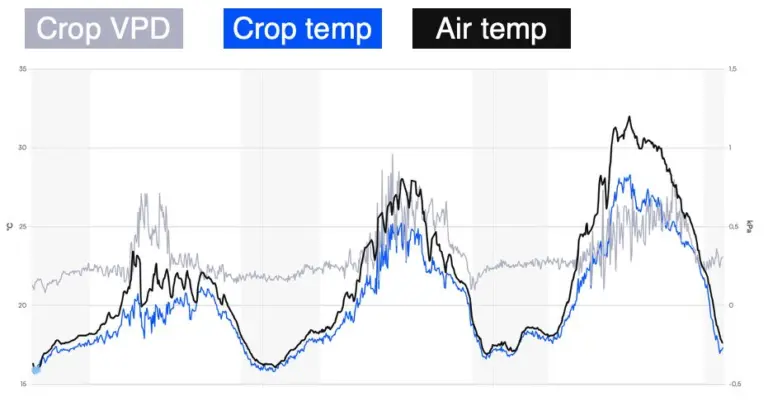
Air and crop temperature both climbed for days. Crop VPD stayed below stress levels the whole time. Only one of those tells you what the crop was doing.

A grower said he no longer thinks of us as a supplier, but as a partner. What sat behind that had nothing to do with the sensors.
Open greenhouse ventilation wide in extreme heat and you dump the humidity and CO2 the crop needs, so VPD spikes until the stomata close. Here is how to vent without stalling the crop.

VPD drives how hard your crop transpires, how stomata open, and how calcium moves. Here are the right ranges, the risks outside them, and how to measure VPD continuously at crop level with Pixel.
Opening the vents isn’t always the answer to greenhouse heat stress. Why limiting ventilation can keep crop VPD healthy above 30°C — and the crop-centric data that makes it safe.