Quick take: RTR (Ratio of Temperature to Radiation) is the 24-hour average temperature a crop gets per mol of light. Growers use it to steer the balance between generative growth (flowers and fruit) and vegetative growth (leaves and stem). More temperature for the light makes the crop more generative. More light for the temperature makes it more vegetative. You calculate it from two numbers from yesterday: the light sum and the 24-hour temperature. In autumn the ratio often goes up, even when no setting changes.
Note: In this article RTR means the Ratio of Temperature to Radiation, as growers use it in crop steering.
What is RTR?
RTR is the ratio of temperature to radiation: the 24-hour average temperature divided by the daily light sum. It shows whether the temperature is in balance with the light the crop gets.
Light drives photosynthesis, which makes sugars (assimilates). Temperature sets how fast the plant uses those sugars, and where they go. With RTR the grower steers the balance between generative growth (flowers and fruit) and vegetative growth (leaves, stem and roots).
- More temperature than the light supports: the plant uses sugars faster than the light can make them. It develops faster, gets weaker and becomes too generative.
- More light than the temperature uses: sugars build up in leaves and stem. The crop becomes too vegetative, with larger leaves, a thicker stem and later fruiting. Production potential is lost.
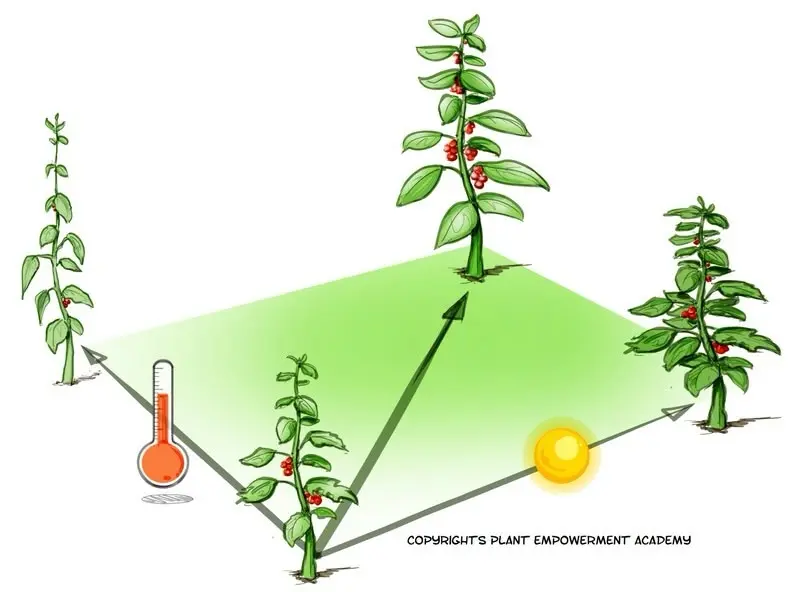
It’s expressed as degrees Celsius of 24-hour temperature per mol of PAR light per m² per day.
How do you calculate RTR?
1. Get yesterday’s light sum and 24-hour temperature. The light sum is the total PAR light the crop received, in mol per m² per day. The 24-hour temperature is the average over the full day and night. Your climate computer, a Sigrow sensor, or the DLI calculator gives you the light sum. Your climate computer also shows the 24-hour average temperature.
2. Work out your target 24-hour temperature. Put yesterday’s light sum into your crop’s RTR line: a base temperature plus a slope times the light sum.
3. Compare the target with yesterday’s 24-hour temperature. The gap between the two is the number to act on.
A worked example: one gerbera grower
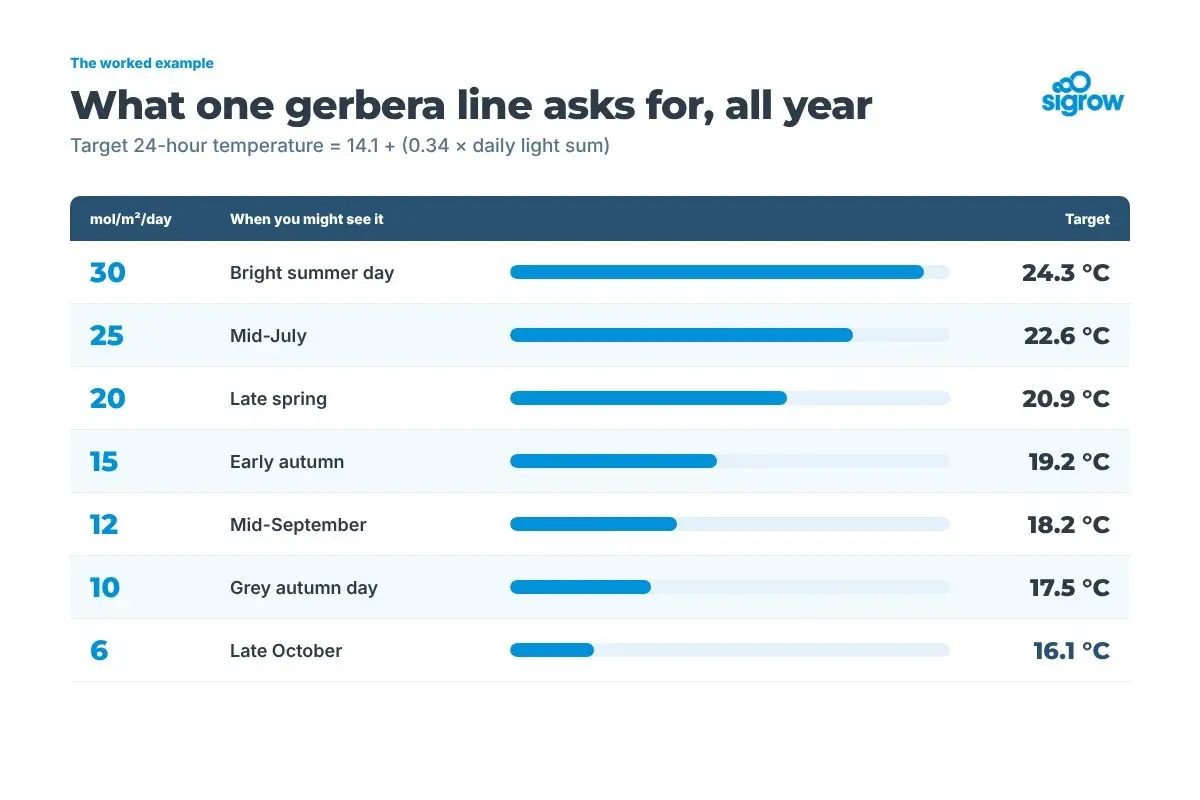
Every crop and every grower has its own line. For one gerbera grower who uses Sigrow, it is:
Target 24-hour temperature = 14.1 + (0.34 × daily light sum)
Across the year, that line asks for this:
| Daily light sum (mol/m²/day) | When you might see it | Target 24-hour temperature |
|---|---|---|
| 30 | Bright summer day | 24.3 °C |
| 25 | Mid-July | 22.6 °C |
| 20 | Late spring | 20.9 °C |
| 15 | Early autumn | 19.2 °C |
| 12 | Mid-September | 18.2 °C |
| 10 | Grey autumn day | 17.5 °C |
| 6 | Late October | 16.1 °C |
Look at the bottom row. Few growers would run gerbera at 16.1 °C. But every degree above the line needs extra light to match it, and in late October that light is not there.
How the grower uses it
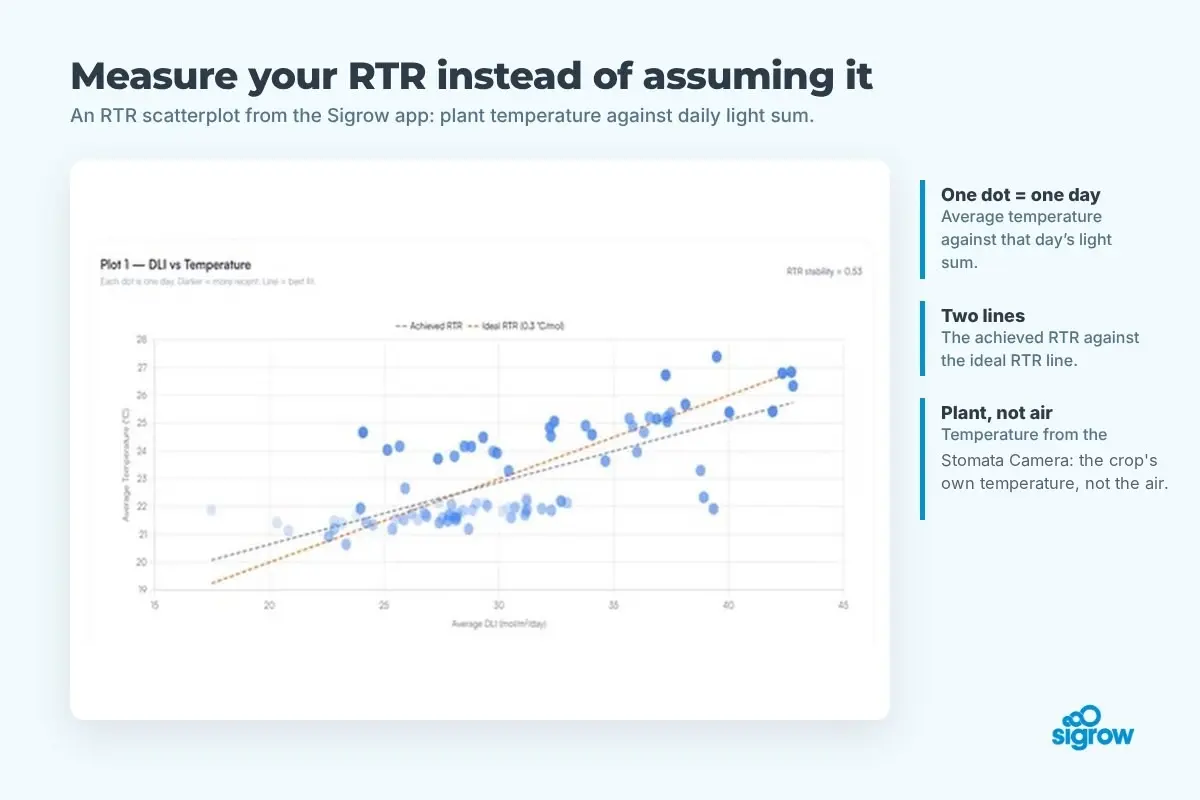
This grower measures RTR instead of assuming it. The temperature comes from the Stomata Camera (plant temperature, not air temperature), plotted as one dot per day against that day’s light sum. Two things stand out:
1. On bright days the crop is on the line. Between 25 and 30 mol, the temperature sits within half a degree of the target.
2. From May to mid-July the number barely moves day to day. That comes from steering, not from the weather.
That is the easier half of the year. With plenty of light, the target and the real temperature stay close. In autumn they move apart.
Why the balance slips every autumn
When the weather turns grey and cool, the greenhouse temperature drops too, so it can look as if the balance stays the same. It does not.
From summer to autumn the daily light sum can fall by about two thirds. The 24-hour temperature falls a degree or two, then stops, because the night setpoint and minimum pipe temperature take over. The result is more temperature per mol of light than in July. The RTR goes up and the crop is pushed towards generative, even though no setting changed.
Is it worth following the line all the way down?
Not always. How far to follow the target down depends on crop load, flower or fruit weight and disease pressure. A colder greenhouse in late autumn is also a wetter one, with more condensation risk.
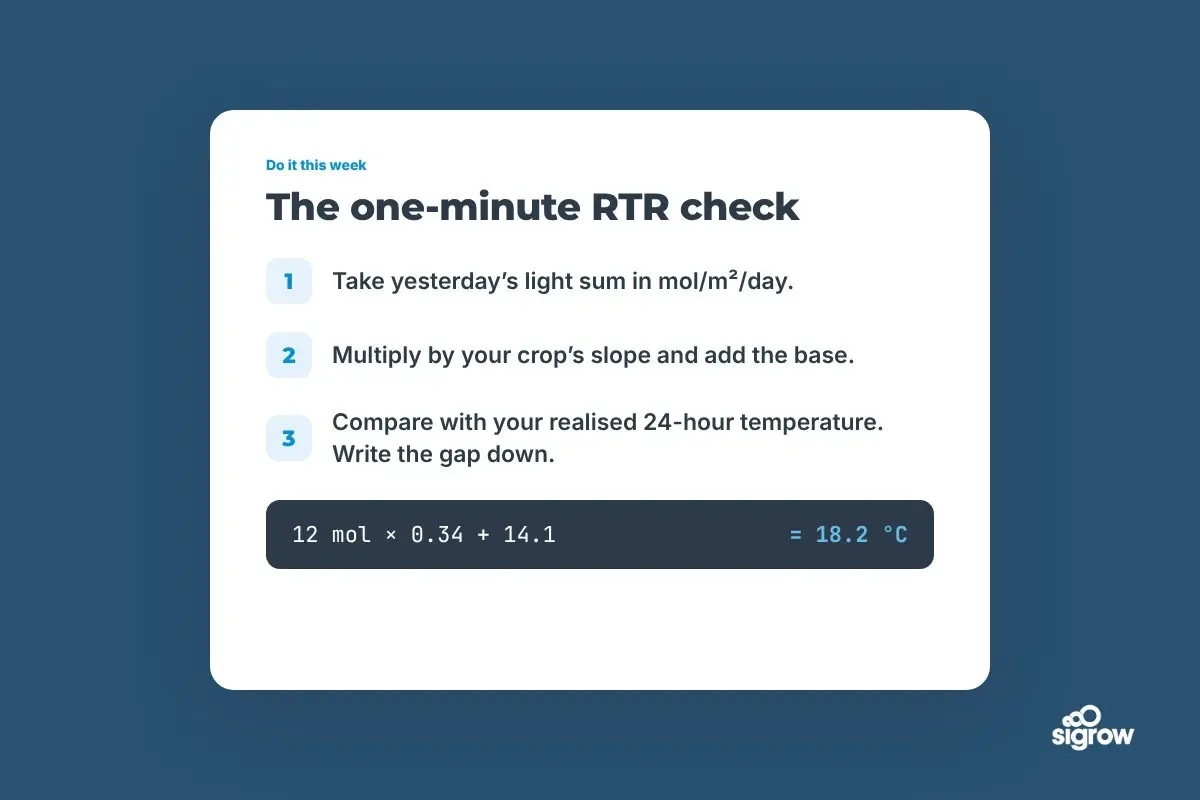
Still, it helps to know the number before the crop shows it. A one-minute check each week is enough:
1. Take yesterday’s light sum (mol/m²/day) and yesterday’s 24-hour temperature.
2. Multiply by your crop’s slope and add the base. (For the gerbera example: × 0.34, + 14.1.)
3. Compare the target with yesterday’s 24-hour temperature and write the difference down.
Do it this week and again in three weeks. If the gap grows, the balance between temperature and light is shifting.
Air temperature or plant temperature?
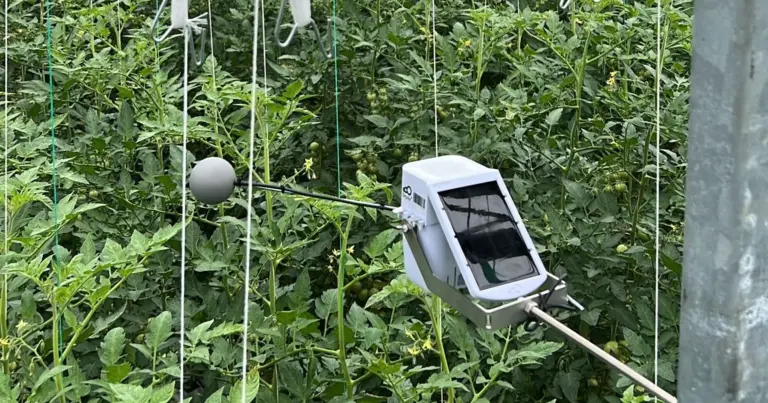
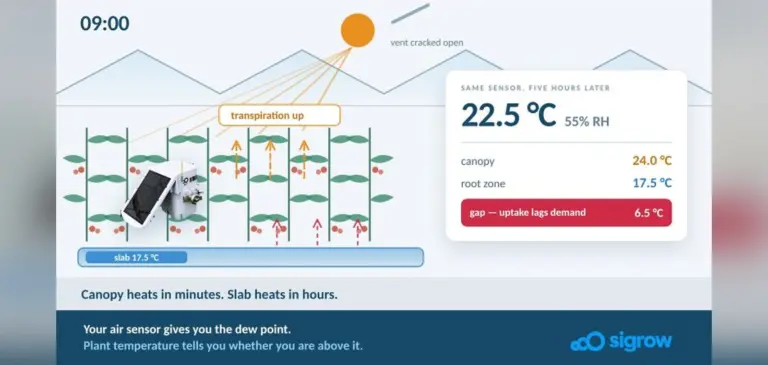
RTR is usually worked out with air temperature. But the crop responds to its own temperature, and on a bright day a leaf can become several degrees warmer than the air. On a clear night it can become colder. Plant temperature from the Stomata Camera gives an RTR based on the temperature of the crop itself.
Why RTR matters in autumn
RTR is often forgotten once summer is over. In autumn, light and temperature both drop, but at very different speeds. A weekly RTR check shows how far apart they have moved.
FAQ
What does RTR stand for in horticulture?
In crop steering, RTR stands for the Ratio of Temperature to Radiation: the 24-hour average temperature per mol of daily light.
What is a good RTR value?
It depends on the crop, the growth stage and the grower’s strategy. Each crop has its own line. The gerbera line above is one real example.
How do I measure the daily light sum?
Add up the PAR light over the day, in mol per m² per day. Many climate computers show it, or use the DLI calculator.
Where does RTR fit in crop steering?
It is the assimilation step. Once the climate is even and radiation is under control, RTR keeps temperature in balance with light, so the crop stays between generative and vegetative.
Find your own line
Yesterday’s light sum and yesterday’s 24-hour temperature are all you need for a first check today. For help building a line for your own crop, we can work it out with you.
Author

Related Blogs

- Grower Insights
By SigrowThe Bees Knew First: What One Measurement Box Can’t Tell You About Your Greenhouse
One measurement box per hectare can hide differences of several degrees, so here…- Grower Insights
By SigrowHow Much Drain Is Enough? What 38% Less Drain Water Looked Like in Strawberries
A strawberry trial cut drain water by 38% and total water by 19.5%…- Grower Insights
By Timon van LemmenWarm Days, Cold Nights: Why Your Tomato Crop’s Dew Point Margin Matters
A respectable 24-hour average can hide a night on the dew point and…

No Related Blogs Found
120-Day Promise
Try Sigrow for 120 days, risk-free. If it does not get your operation under tighter control, send the system back for a full refund of the hardware and the software subscription paid to date — no restocking fee.

We’re here to support you.
Questions, assistance, or just want to chat – reach out!