A pepper grower messaged me during the last record high temperatures: “Outside it’s 35°C and still climbing. I’ve got the vents wide open to dump the heat, but the crop is clearly not keeping up and losing vigor. What other options do I have?”
The answer wasn’t in the temperature he was fighting. It was in what left the greenhouse the moment he opened the vents.
What greenhouse ventilation removes in extreme heat
With greenhouse ventilation wide open, the hot air goes out. So does the humidity the crop has been transpiring, and so does the CO₂. At 35°C the air can hold an enormous amount of moisture. The instant that humid air escapes faster than the crop can replace it, the vapor pressure difference (VPD) rises.
Push the VPD too high and the pepper starts to suffer. It closes its stomata. And a pepper with closed stomata is a pepper that has stopped working.
One open vent, three plant balances disturbed
The underlying mechanism is bigger than temperature. Opening the vents fully disturbs all three plant balances at once.
- The energy balance. Transpiration is the plant’s main route to shed heat. When the stomata shut, that cooling stops, and under a high radiation load the leaf temperature rises rapidly.
- The water balance. The transpiration stream that carries calcium and other nutrients to the distal plant organs drops.
- The assimilate balance. Water loss is reduced, but CO₂ uptake stops, photosynthesis stalls, and the CO₂ you vented away is gone regardless.
You opened the vents to help the crop, and you pushed it into a standstill.
Why the thermometer lies in extreme heat
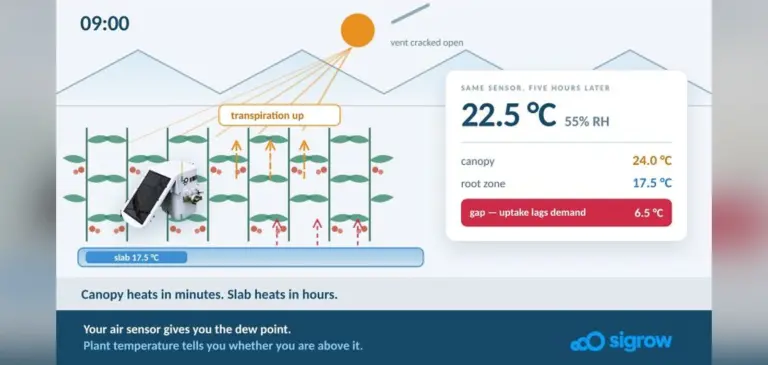
What I often see go wrong: the vents get used to chase air temperature, as if the thermometer were the only dial that matters. The number on the screen and the state of the crop are telling two different stories.
What growers who manage heat well actually do
They resist the reflex to vent everything away. They squeeze the vents back gradually, in steps, and watch humidity, CO₂ and VPD respond as they go. This is the same logic behind limiting ventilation during heat, applied minute by minute.
Air temperature does rise a little, which feels wrong at first. But the transpired moisture stays inside, CO₂ stays inside, and VPD settles in the active window. With VPD in range the stomata stay open, transpiration continues, the plant keeps cooling itself, and photosynthesis keeps running. As an additional measure, fogging can add humidity and cooling without venting away your CO₂.
In extreme heat, a heat problem is not always a heat problem
The confidence comes from watching the crop stay active in the data, not from the instinct to open up. A heat problem can be a balance problem. The lowest air temperature is not the goal; an active plant is. A slightly warmer greenhouse with the stomata open and the crop transpiring will outperform a cooler one where the plant has shut down.
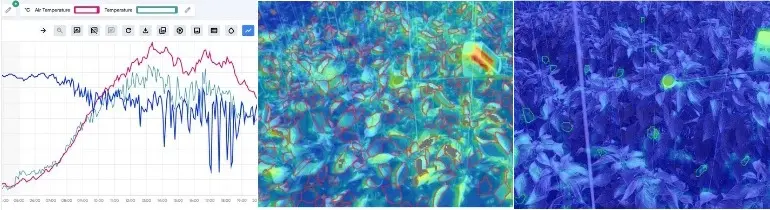
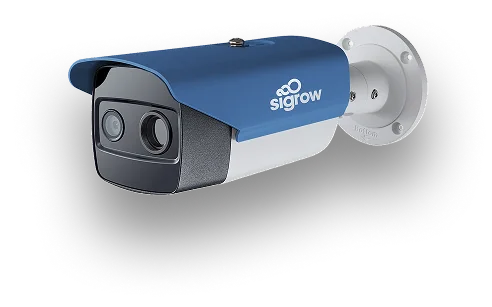
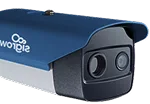
Steering like this depends on seeing the crop, not just the air. Sigrow’s Stomata Camera measures crop temperature, leaf-level VPD and stomatal behavior directly, while Air+ and Air Pro+ keep watch on humidity and CO₂. Together they show whether VPD is sitting in the active window, so you can hold temperatures without pushing the crop into a standstill. You can also check your own numbers against the healthy range with our free VPD calculator.
This post was originally shared by Timon van Lemmen on LinkedIn. Read the original post →
Want to discuss climate management challenges in your greenhouse? Reach out to Timon and the Sigrow team at success@sigrow.com (Mon to Fri, 9:00 to 18:00 CET) or support@sigrow.com (Mon to Fri, 9:00 to 21:00 CET).
Follow Sigrow on LinkedIn for more insights from the field.
Author

Related Blogs

- Grower Insights
By SigrowWarm Days, Cold Nights: Why Your Tomato Crop’s Dew Point Margin Matters
A respectable 24-hour average can hide a night on the dew point and…- Grower Insights
By SigrowSpectral Solar Panels Keep Greenhouses Cooler — Why Plant Temperature Monitoring Matters
Nieuwe Oogst covers Voltiris spectral panels that filter NIR while passing PAR light….- Grower Insights
By SigrowMore Light or More Temperature? How RTR Answers the Question
Light makes the sugars, temperature spends them. RTR connects the two and shows…

No Related Blogs Found
120-Day Promise
Try Sigrow for 120 days, risk-free. If it does not get your operation under tighter control, send the system back for a full refund of the hardware and the software subscription paid to date — no restocking fee.
We’re here to support you.
Questions, assistance, or just want to chat – reach out!