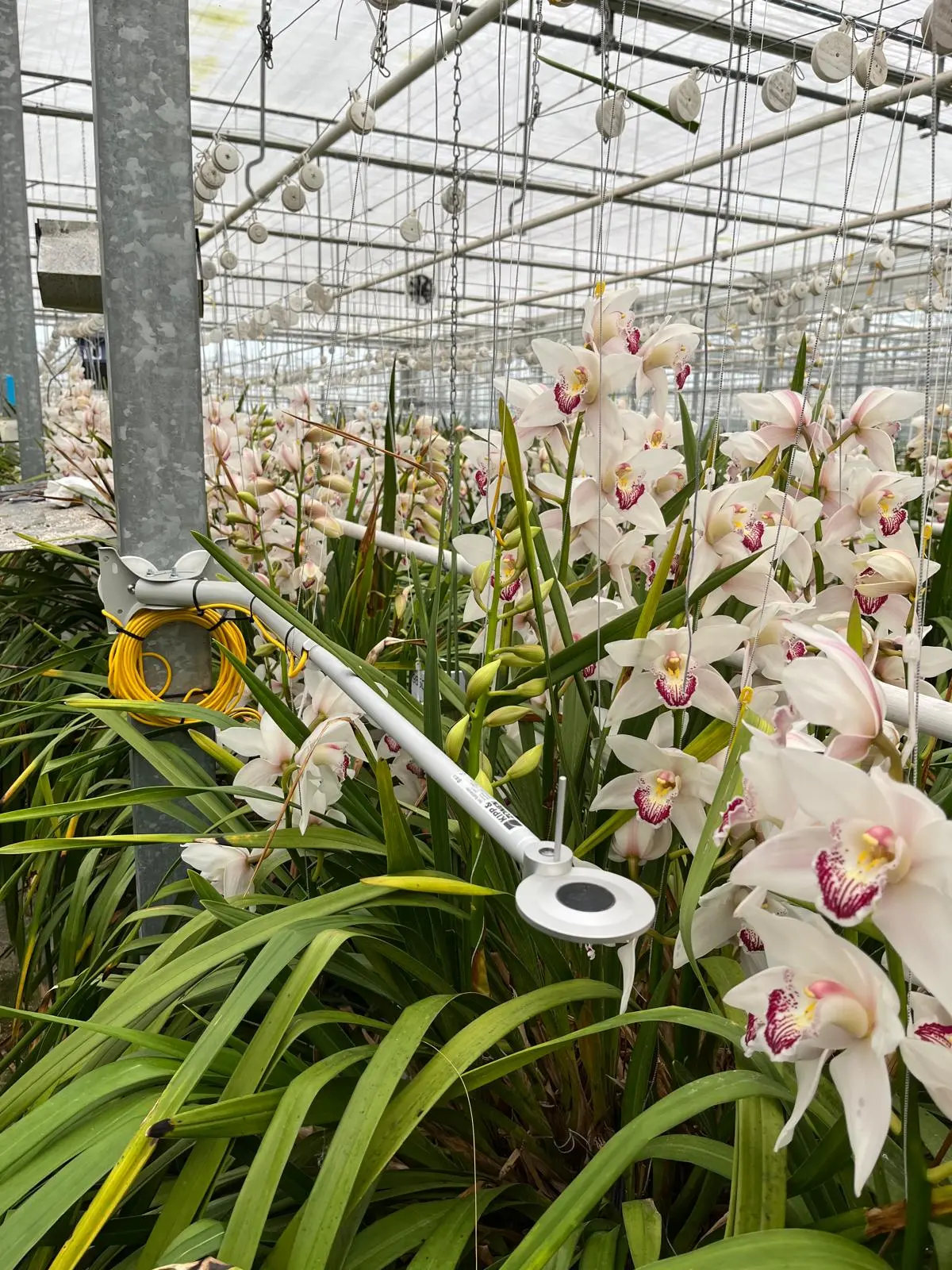
Greenhouse Radiation Sensor
Net Radiometer
See the Energy You Are Wasting
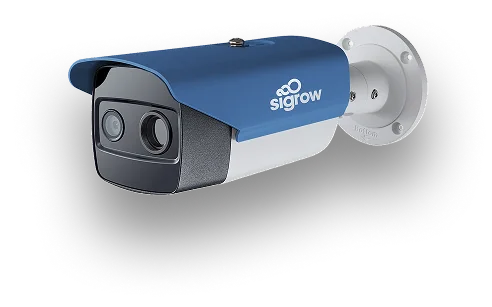
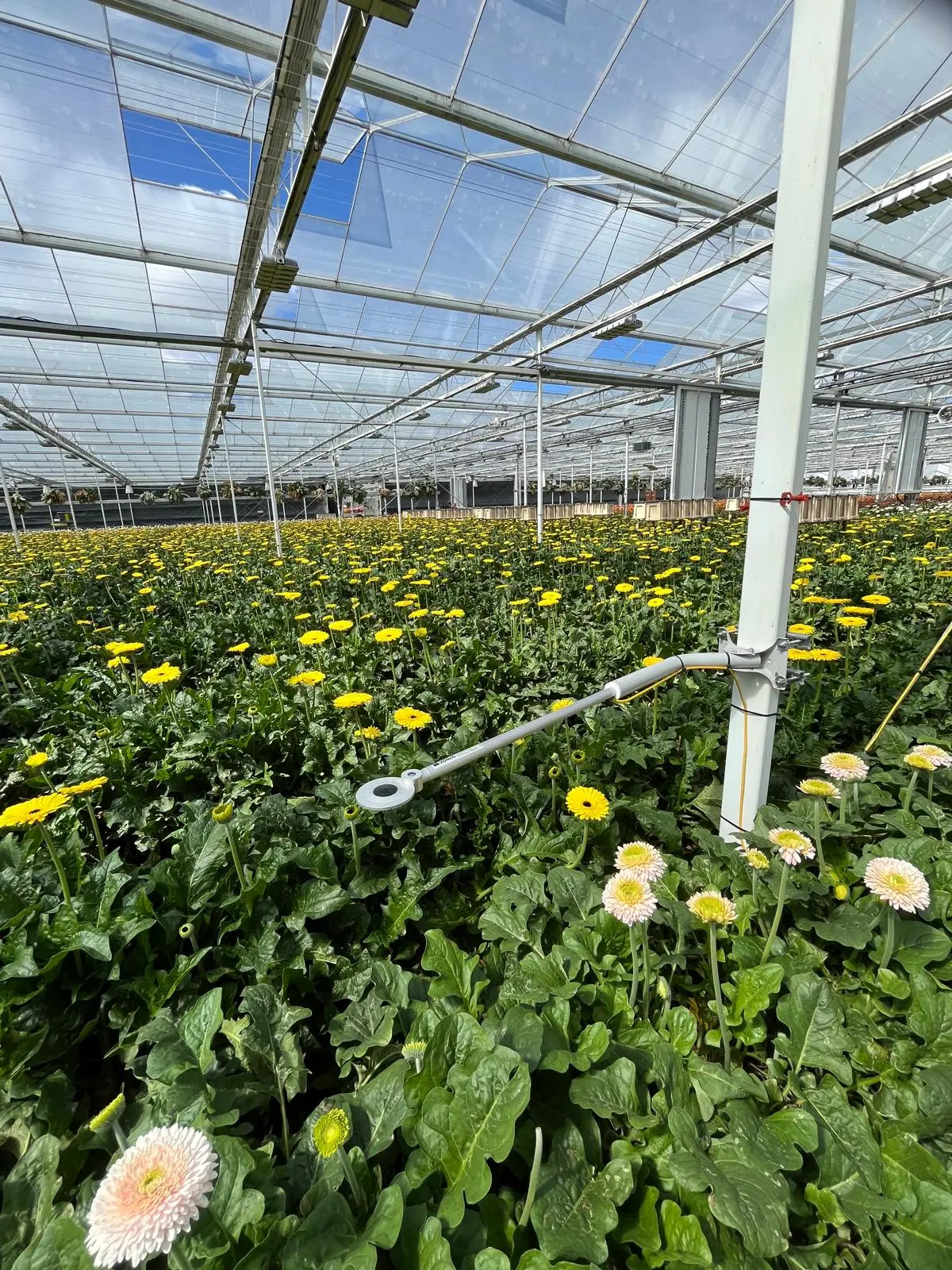
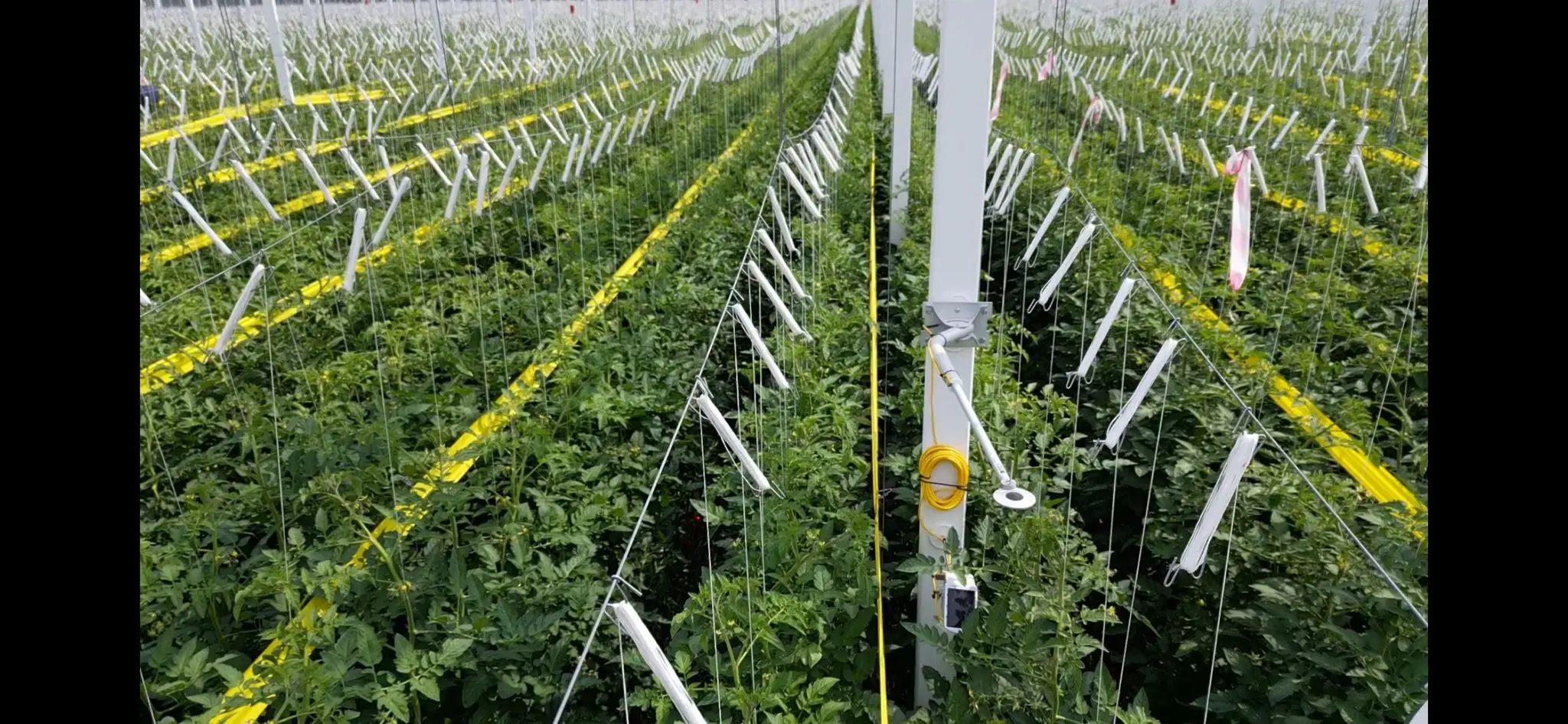
The Sigrow Net Radiometer measures the one thing your air sensors and PAR sensors cannot: how much energy your crop is actually gaining or losing to its surroundings. One number in W/m², updated continuously, positive when the crop is absorbing energy, negative when it is losing it. That is how you decide when to close a screen, when to run minimum pipe, and when to trust that the crop is transpiring. This is the only sensor that measures the radiation in the greenhouse.
- Day and Night Radiation Balance
- Transpiration Rate Input
- Screen and Heating Optimisation

Continuous W/m²
Net Radiation
+85 W/m²
Spectrum
Full Solar + Longwave
Wireless
Solar-Powered
Range
−40 to 80 °C
The Night Leak
On a clear night, your crop is leaking heat. Not through the vents. Not through the pipes. Straight up through the glass.
Radiative Cooling
How much heat is the crop actually losing right now?
Screen Timing
Is the screen open too long, or closed too early?
Wasted Energy
Is minimum pipe doing its job, or burning gas for nothing?
Without a radiation meter in the greenhouse, every grower on a clear night is guessing.
The leaves and fruit radiate heat toward the cooler roof, causing their surface temperatures to fall below the ambient air temperature. As a result, condensation begins to form on the fruit. Botrytis can develop before the climate control system registers any alarm, as it monitors air conditions — while the air parameters still indicate a stable environment.

Condensation Risk
Dew forms on fruit before alarms trigger
Botrytis Onset
Disease starts before you see it
Energy Waste
Heating without knowing if it is needed
One measured number in W/m² answers all three at once.

Where You Will See It First
Four ways a net radiometer changes how you steer your greenhouse
Night-time Condensation Risk
The moment greenhouse net radiation goes negative, you know the crop is cooling. Close the screen before dew forms, not after.
Screen Strategy on a Real Trigger
Open and close the greenhouse thermal screen on measured radiation balance instead of a clock. Less cold stress, less wasted gas.
Transpiration Rate
Radiation drives transpiration far more than the climate box temperature and RH measurements. Feed continuous W/m² into your climate model and see the difference in steering accuracy.
Day-time Energy Confirmation
On cloudy and variable days, W/m² tells you what the crop is actually absorbing, not what a clear-sky model says it should be.
Built for Plant Empowerment
Net radiation forms the foundation of Plant Empowerment Step 2 (Radiation Management). The Sigrow Net Radiometer provides this value directly, enabling all subsequent decisions—such as screen positioning, heating strategy, humidity control, and irrigation steering—to be based on the actual radiation received by the crop.
Frequently Asked Questions
PAR sensors only see the visible light plants use for photosynthesis, and they read zero at night. Air sensors tell you about the air, not the crop. Neither tells you how much energy the crop is actually gaining or losing — which is the one number that drives screen strategy, minimum pipe decisions, and the crop’s transpiration rate. A pyranometer or pyrgeometer on the roof measures what hits the glass — not what reaches the crop. A net radiation meter reads that balance directly, at canopy level, day and night.
First, screen control shifts from fixed schedules to real-time crop net radiation data, allowing you to reduce unnecessary heat loss without increasing the risk of low crop activity. Second, you gain early visibility into condensation risk on leaves and fruit surfaces — often hours before it develops — enabling proactive greenhouse climate adjustments. Third, the transpiration rate becomes a measured input rather than an estimate, significantly improving the accuracy of all downstream irrigation and climate decisions.
The Net Radiometer measures the radiation balance above the canopy, fully independent of the growing medium. As a result, it performs consistently across all cultivation systems—whether in soil-based or substrate-based greenhouses, including soil-grown ornamentals, rockwool-grown tomatoes, peat-grown strawberries, or coco-grown cucumbers.
Rijk Zwaan, Delphy, Wageningen University & Research, Marjoland, Nature Fresh, Mucci, and more than a hundred other commercial and research greenhouses.
The Stomata Camera and Net Radiometer can be integrated into a single system. The Net Radiometer quantifies the energy available to drive transpiration, while the Stomata Camera provides insight into how the crop utilizes that energy, including the influence of convective heat transfer. Together, they form a closed-loop approach, enabling growers to base decisions on real plant responses. By combining both measurements, screen positioning, heating, and irrigation can be optimized more precisely, reducing reliance on climate control model estimates.
A radiation meter is the broad category — any sensor that measures radiation flux. The Sigrow Net Radiometer is a specific type of radiation meter: it measures both incoming and outgoing radiation to give you the net balance in W/m². That makes it far more useful for greenhouse climate decisions than a single-direction radiation meter or a PAR-only sensor.
Trusted by leading growers and research institutes

See what your crop is actually feeling, day and night.
Every Sigrow installation is specified to the site and the crop. Tell us what you grow and how your greenhouse is steered, and we will come back with a Net Radiometer package that fits the setup you already have.
or
We’re here to support you.
Questions, assistance, or just want to chat – reach out!