Spring is a favorite season in horticulture because of the increase in radiation, but for some crops it also brings a new layer of complexity. Pepper is a good example.
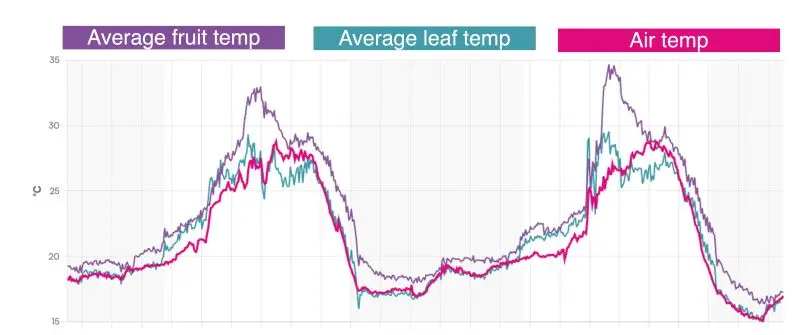
Pepper plants are particularly sensitive to higher radiation and increasing temperatures in spring. Compared to crops like tomato or cucumber, pepper has relatively low transpiration rate. This means the plant has less natural cooling capacity.
The result? Fruit temperatures can rise quickly. When the fruit overheats and cannot dissipate heat, it becomes vulnerable. In practice, this can lead to fruit burn and create entry points for infections.
Traditionally, growers manage this with screening strategies. But to do that effectively, you need reliable fruit temperature data. That’s where it gets tricky: point sensors struggle because the crop is constantly moving and developing.
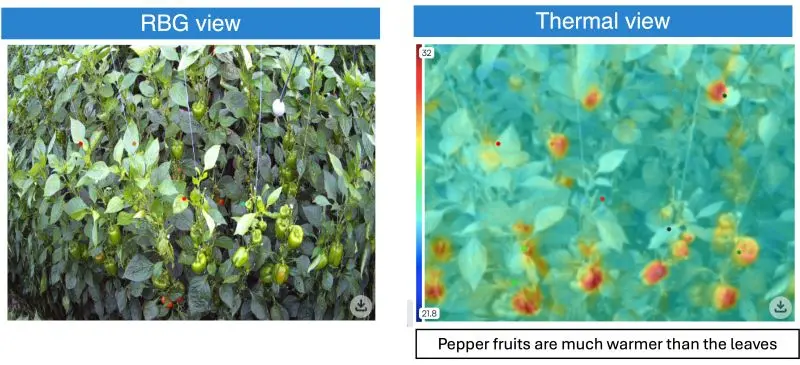
What growers actually need is continuous, accurate insight into fruit and leaf temperature, separately.
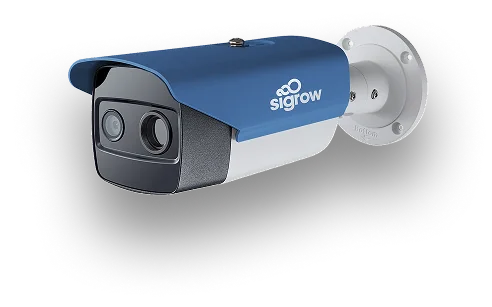
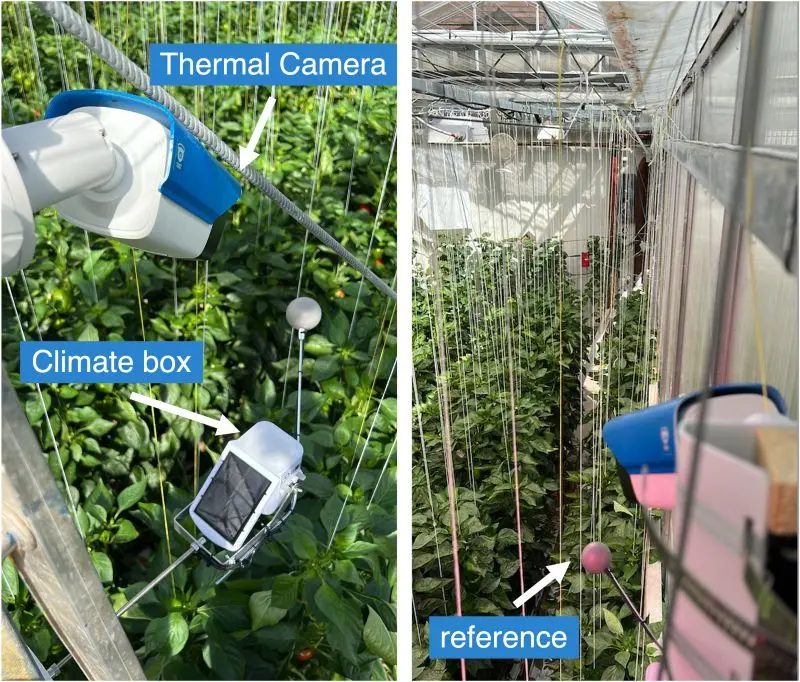
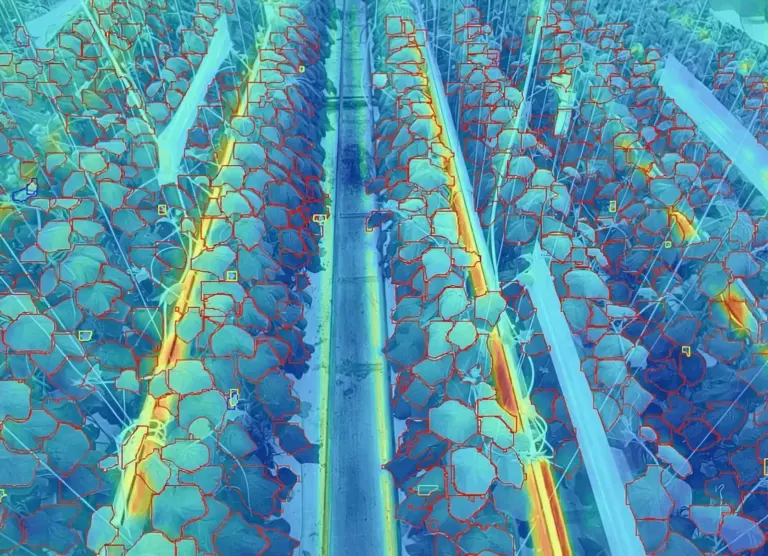
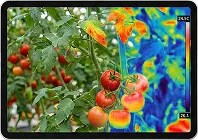
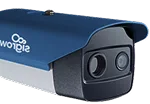
In practice, what we see with pepper growers is a shift toward vision-based monitoring. Using the Sigrow Stomata Camera (AI-powered thermal imaging), growers can automatically detect and distinguish fruits and leaves, and measure their temperatures in real time and couple it to the climate computer and steer directly via Priva Horticulture, Hoogendoorn Growth Management and Ridder
Interestingly, even camera placement turned out to be a challenge. Pepper plants tend to grow leaves over the fruits, which makes recognition difficult. Together with growers, we fine-tuned the setup. The most reliable results were achieved by positioning the camera at a 90-degree angle from the side, improving visibility and detection accuracy.
In case you are curious if this could also work in your crop, feel free to reach out!
Author

Related Blogs

- Grower Insights
By SigrowSpectral Solar Panels Keep Greenhouses Cooler — Why Plant Temperature Monitoring Matters
Nieuwe Oogst covers Voltiris spectral panels that filter NIR while passing PAR light….- Grower Insights
By SigrowMore Light or More Temperature? How RTR Answers the Question
Light makes the sugars, temperature spends them. RTR connects the two and shows…- Grower Insights
By SigrowLimiting Ventilation in a Heatwave: What Crop VPD Shows
Air and crop temperature both climbed for days. Crop VPD stayed below stress…

No Related Blogs Found
120-Day Promise
Try Sigrow for 120 days, risk-free. If it does not get your operation under tighter control, send the system back for a full refund of the hardware and the software subscription paid to date — no restocking fee.
We’re here to support you.
Questions, assistance, or just want to chat – reach out!