After an unusually warm summer across much of the world, conditions are shifting: lower temperatures, more rain, and reduced radiation. For growers, this means adapting the cultivation strategy from summer mode to autumn/winter mode. Easier said than done.
Autumn is one of the most difficult periods in cultivation. The risk of fungal disease increases dramatically, mainly due to two processes:
- Condensation (air depositing water on leaves)
- Guttation (plants pushing water out through their leaves)
Condensation is well known, but guttation deserves more attention. The dew point calculator for greenhouses shows which nights and hours leaf surfaces reach the dew point.
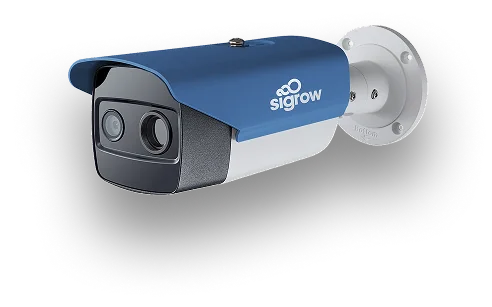
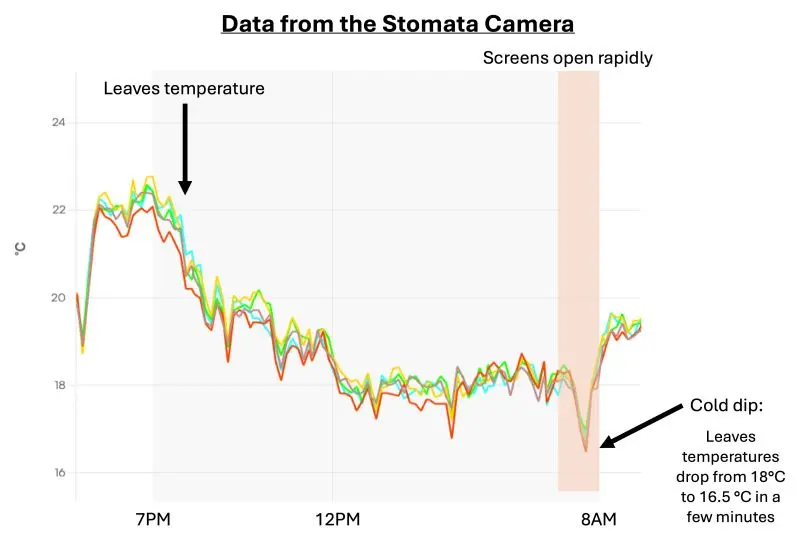
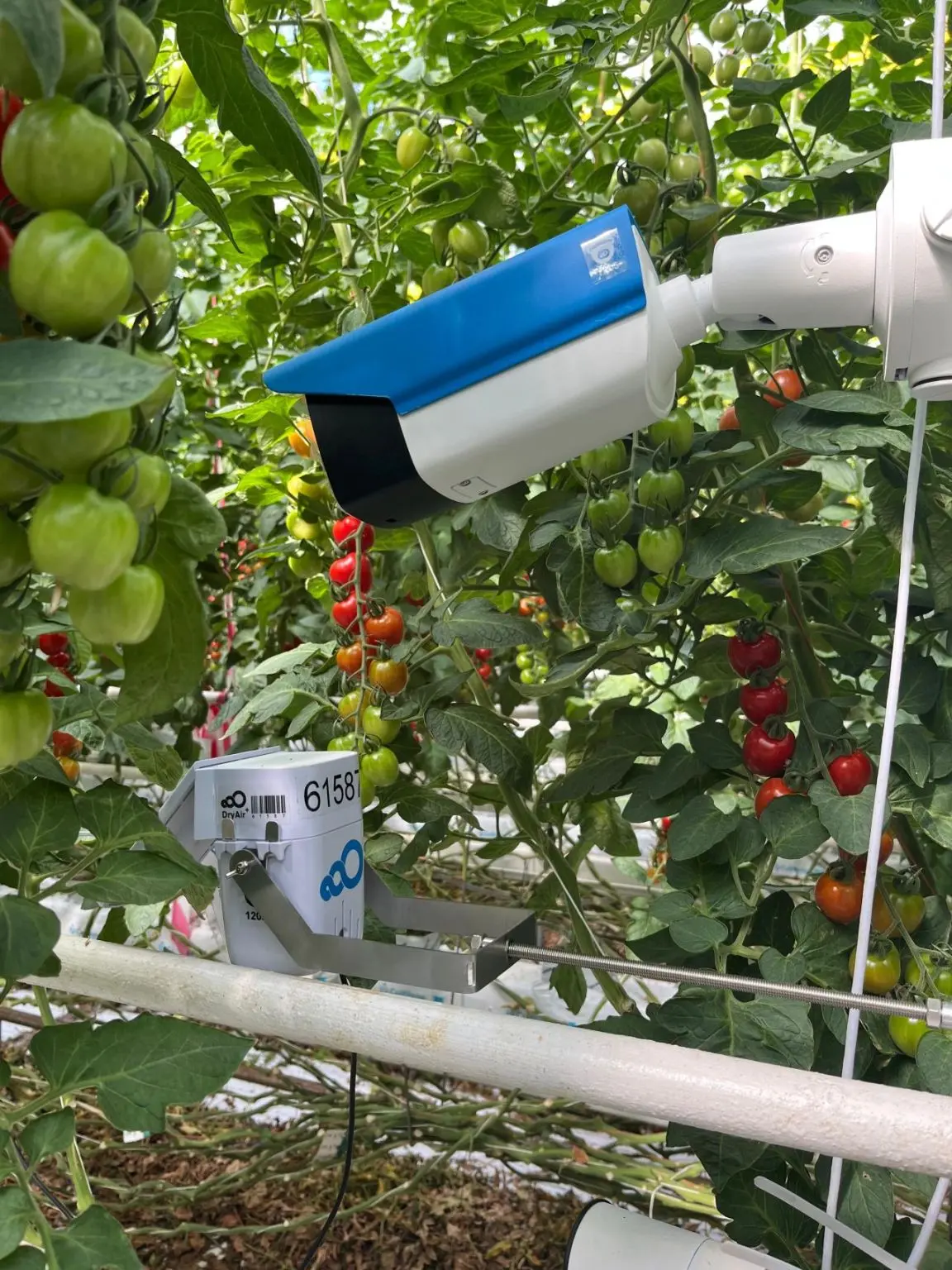
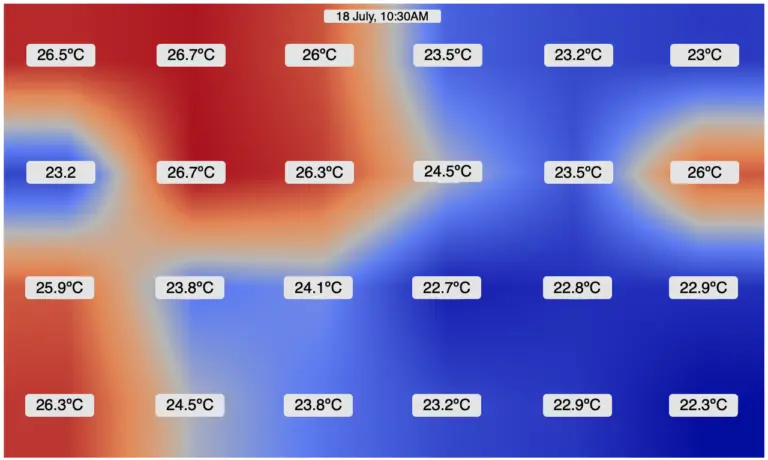
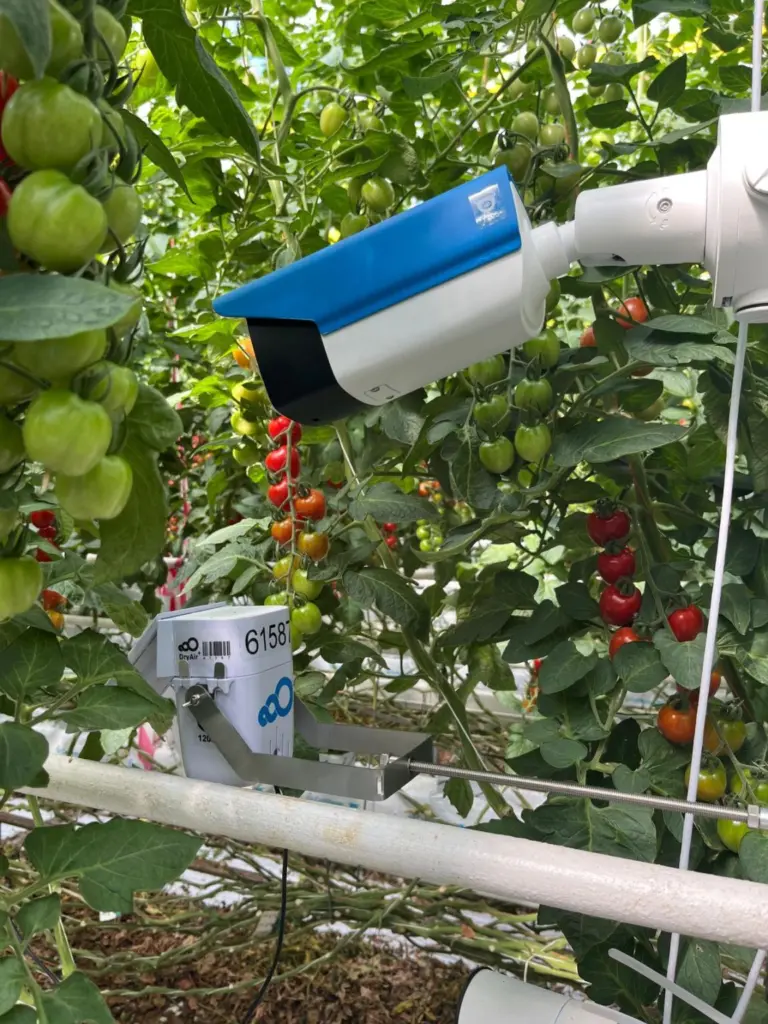
In recent “Data-discovery meetings” that I had with with growers from Western and Northern Europe, we discussed the role of screen opening and closing strategies, and how these impact greenhouse climate. Using Sigrow sensors, especially the Stomata Camera and Net radiometer, we can clearly see how sensitive plants are during this period.
What is guttation?
Guttation happens when water pressure builds up inside the plant and cannot be released through transpiration, especially at night when stomata are closed. Root pressure forces water out through special leaf structures (hydathodes), forming droplets. This is most visible in the morning when screens are opened and conditions rapidly change.
Here is a typical scenario:
- During the night, transpiration is very limited, often below 20 g/m²/h, because of the low VPD (< 0.5 kPa). Water slowly accumulates inside the plant.
- In the morning, PAR > 0, and the grower opens the screens.
- Cold air from above the screen drops onto the crop, causing a cold dip in plant temperature.
- At the same time, light drives plants to transpire, but the leaves are still cold while roots remain active, pushing water upward.
- The plant cannot transpire efficiently, so guttation occurs.
How to prevent guttation?
One proven approach is adjusting the screen opening strategy:
- 0 to 18%: steps 0% -> 2% -> 4% -> 6% -> 18% (15 minutes between each step) to avoid cold air drop
- 18% to 100%: open the last 82% within 15 minutes
This gradual process prevents cold air from dropping on the crop all at once, allowing it to warm before reaching the plants. It also reduces radiation loss towards the greenhouse roof, preventing additional cooling.
The result: a smoother climate transition, lower risk of guttation, and healthier crops.
Do you see guttation in your greenhouse? How are you preventing it?
Author

Related Blogs
-
- Grower Insights
- Sensors & Data
By SigrowLess Mycos in LED Cucumber: Why Stimulating Transpiration Takes a Different Kind of Control
A new field report from Delfgauw confirms what leaf-level sensor data has been… -
- Sensors & Data
By Mihnea ParaschivWhich System do you trust more
Thermistor or crop sensors? Learn which measurement system gives better insights into plant… -
- Sensors & Data
By Mihnea ParaschivEnergy Prices Are Rising Again Worldwide
Energy prices are rising again. Learn how Dutch greenhouse growers reduce energy use…

No Related Blogs Found
120-Day Promise
Try Sigrow for 120 days, risk-free. If it does not get your operation under tighter control, send the system back for a full refund of the hardware and the software subscription paid to date — no restocking fee.

We’re here to support you.
Questions, assistance, or just want to chat – reach out!