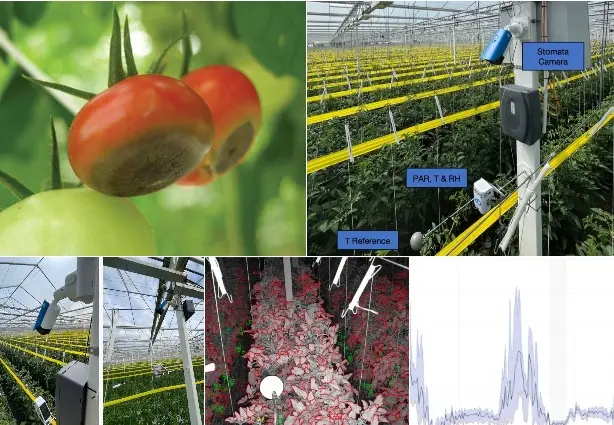
A tomato grower called with a familiar problem: blossom end rot, no obvious stress, irrigation looking fine, calcium levels good. The answer was not in his irrigation schedule. It was in what happened days earlier, on a cold, clear spring night.
Calcium moves through transpiration — and only through transpiration
The day before had been warm and sunny. Substrate was up to temperature. Roots were active. The plant was growing strong. Then the sun went down.
Outside temperature dropped fast. The greenhouse roof cooled rapidly through radiation to the cold night sky. The crop canopy cooled with it. Transpiration stopped.
And when transpiration stops, calcium transport stops with it. Calcium moves almost exclusively through the transpiration stream. No flow, no delivery. The developing fruit cells at the blossom end stopped receiving calcium. Cell walls were weak. The damage was done quickly.
Blossom end rot is not a nutrition problem. It is a transpiration problem.
The mechanism: outgoing radiation on clear spring nights
Outgoing radiation is driven by the temperature difference between the crop and the surface it perceives overhead. On a clear spring night without proper screening, that surface is your greenhouse roof — and it is cold. Canopy temperature drops. VPD drops. Transpiration drops. The roots stay warm, the plant keeps growing, but the calcium is not moving.
What often goes wrong in practice: screens are only partially closed, so the cold roof remains visible to the crop. Venting is stopped entirely to save energy, so humidity builds up and VPD drops further. The climate computer shows relative humidity within range — but the developing truss tells a different story. The VPD calculator and VPD chart shows how far VPD falls at any temperature and humidity combination.
What well-managed greenhouses actually do
Growers who manage this well, with a double-screen setup, follow a consistent approach. First, they vent at both wind and lee side — not to cool the greenhouse, but to remove humid air and maintain a VPD that keeps gentle transpiration going through the night. Then they close the upper screen fully and the lower screen to around 80–95%.
Warm greenhouse air rises through the gap in the lower screen and collects between the two layers, heating both screens from within. The crop perceives the underside of the lower screen rather than the cold roof above. Outgoing radiation drops. Calcium keeps moving.
The takeaway
Blossom end rot in spring is not always a fertilisation problem. It can be a climate management problem — one that started on a clear night, days before the damage became visible. By the time you see the symptoms, the cause is already in the past.
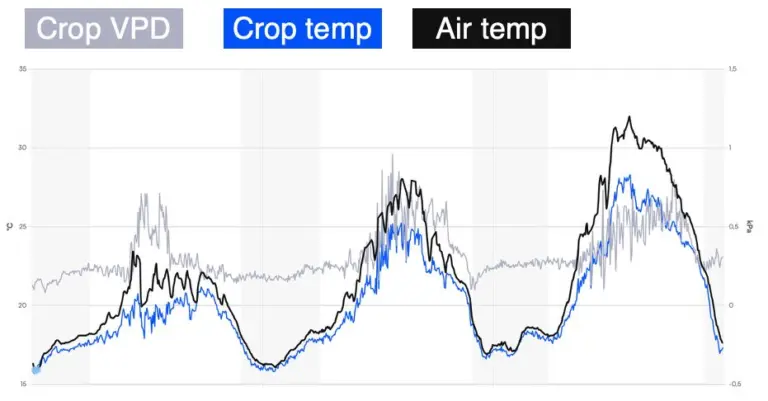
Monitoring canopy temperature, VPD, and screen position throughout the night gives you the data to act before the damage is done.
Related: for the VPD ranges to steer by and how to measure VPD at crop level, read VPD in the greenhouse: what it is and how to steer it.
This post was originally published by Timon van Lemmen on LinkedIn. Read the original post →
Want to discuss climate management challenges in your greenhouse? Reach out to Timon or the rest of the Sigrow team at success@sigrow.com (Mon–Fri, 9:00–18:00 CET) or support@sigrow.com (Mon–Fri, 9:00–21:00 CET).
Follow Sigrow on LinkedIn for more insights from the field.
Author

Related Blogs

- Grower Insights
By SigrowSpectral Solar Panels Keep Greenhouses Cooler — Why Plant Temperature Monitoring Matters
Nieuwe Oogst covers Voltiris spectral panels that filter NIR while passing PAR light….- Grower Insights
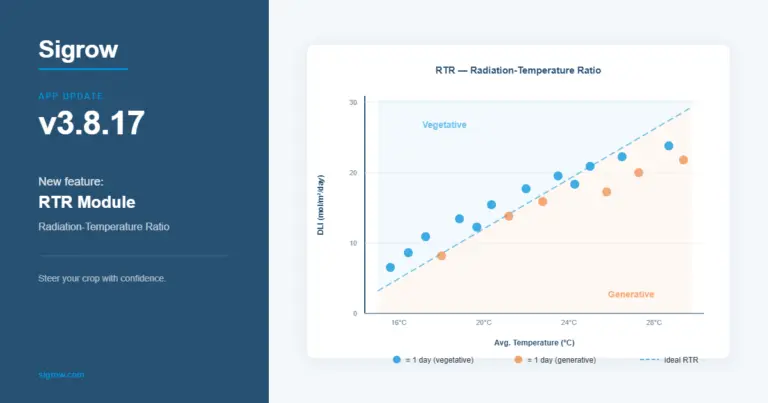
By SigrowMore Light or More Temperature? How RTR Answers the Question
Light makes the sugars, temperature spends them. RTR connects the two and shows…- Grower Insights
By SigrowLimiting Ventilation in a Heatwave: What Crop VPD Shows
Air and crop temperature both climbed for days. Crop VPD stayed below stress…

No Related Blogs Found
120-Day Promise
Try Sigrow for 120 days, risk-free. If it does not get your operation under tighter control, send the system back for a full refund of the hardware and the software subscription paid to date — no restocking fee.
We’re here to support you.
Questions, assistance, or just want to chat – reach out!